Skip to content Skip to footer

Dermal Filler

What Are Dermal Fillers?

Dermal fillers are injectable gels—most commonly hyaluronic acid (HA)—used to restore lost volume, refine contours, and soften lines. HA is a water-binding molecule naturally present in skin; when cross-linked into a gel it can rehydrate, support, and shape tissues. Other families used selectively in Turkey include calcium hydroxyapatite (CaHA) for structural lift, poly-L-lactic acid (PLLA) for collagen stimulation, and PMMA microspheres for special indications. HA fillers remain the workhorse because they are adjustable or reversible with hyaluronidase if needed—an important safety advantage for international patients. A typical plan layers soft, spreadable gels for fine lines and more elastic, high-lift gels for cheeks, chin, or jawline. Fillers are different from neuromodulators (e.g., toxin), which relax muscles; the two are often combined for balanced rejuvenation. In the dermal filler in Turkey pathway, evaluation starts with proportion (forehead–midface–lower face balance), skin quality, and dynamic expressions to avoid overfilling and maintain natural motion. 

Who Is a Good Candidate for Fillers?

Good candidates are healthy adults seeking subtle, structural refinement rather than drastic change. Ideal profiles include early midface deflation, mild lip asymmetry, chin under-projection, or crease accentuation that persists despite skincare. You should be able to pause nicotine, postpone elective dental work close to treatment, and follow aftercare. Conditions that require caution or deferral include pregnancy/breastfeeding, active skin infection or herpes flare on the day, recent dental procedures, uncontrolled autoimmune issues, and a history of severe allergies without prior assessment. Very lax skin or heavy jowling may respond better to energy-based tightening or surgery; in those cases filler is supportive, not curative. Expectations also matter—less can be more when the injector respects facial dynamics, ethnic characteristics, and age-related balance.

A strong candidate typically:

Where Can Dermal Fillers Be Used?

Fillers are versatile tools for shape correction and texture support across face and select body areas. A careful map ensures each milliliter works where it matters most, with product choice tailored to tissue thickness and movement. Common treatment zones include:

How Are Dermal Filler Treatments Performed in Antalya, Turkey?

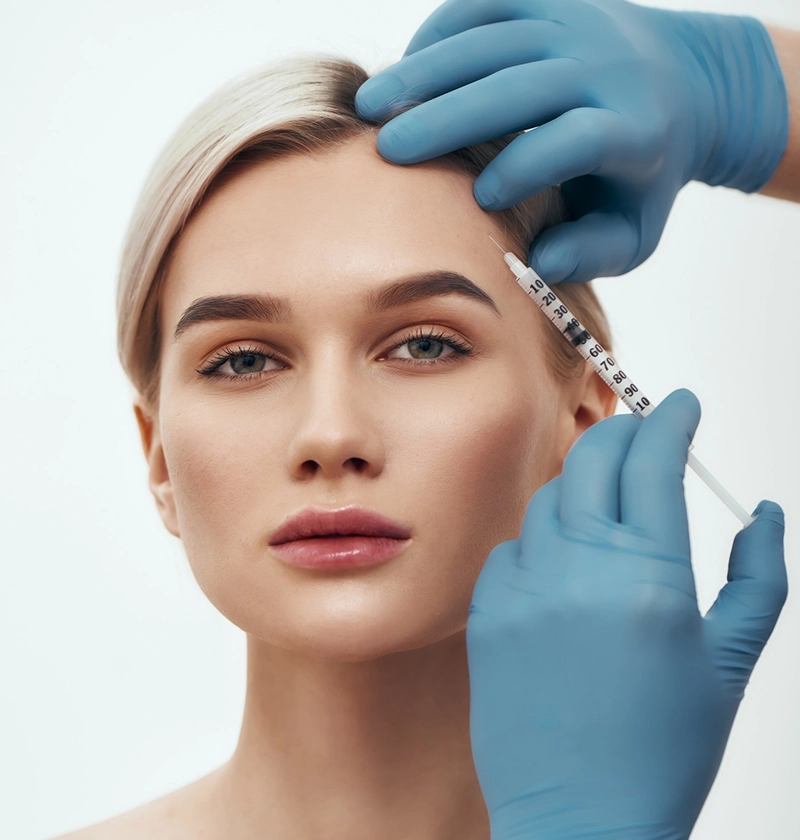
Your visit begins with photos, consent, and a proportion analysis (frontal and profile). The injector selects product families and injection planes (deep periosteal support vs. superficial shaping) and chooses needle or blunt-tip cannula depending on area and vessel density. For comfort, topical anesthetic and lidocaine-containing gels are used; nerves may be blocked for lips or chin. Strict asepsis, skin marking of high-risk zones, and slow, micro-aliquot placement reduce complications. In higher-risk regions (tear trough, nose, glabella), senior injectors may use ultrasound mapping, aspiration, and cannula-first strategy; some clinics keep hyaluronidase and emergency kits bedside as standard. Expect mild swelling and occasional pinpoint bruises; most sessions finish within 30–60 minutes with immediate return to light activity.

Typical session flow

  1. Assessment & plan: Indications, product choice, dose range per area, staged approach if needed.
  2. Injection: Layer-by-layer placement with constant symmetry checks; molding (not massage) to settle the gel.
  3. Review & schedule: Immediate photos, early aftercare, and a follow-up touch-point in 2–3 weeks if adjustments are planned.
Patients Reviews

What Did Our Patients Say?

The Recovery Process After Dermal Filler in Turkey

Lip Filler in Antalya, Turkey — Approach & Aesthetics

For lips, the aim is hydration, definition, and balance rather than size alone. A detailed assessment reviews dental show at rest, upper-to-lower ratio, Cupid’s bow, commissure support, and how lips move when speaking or smiling. Techniques vary—border tracing and micro-columns for structure, micro-droplet hydration for dryness, and targeted commissure support to reduce downturn. “Russian-style” vertical column methods are used selectively; not every lip benefits from a flat profile. The best outcomes come from modest first-pass volumes with a review after swelling settles. HA’s reversibility is a safety net, but careful plane selection and gentle molding make reversal rarely necessary. Expect 2–3 days of peak swelling, possible small bruises, and a softening phase over 2–4 weeks as the gel integrates.

How Much Do Fillers Cost in Turkey?

There isn’t a single number; dermal filler price in Turkey depends on product family, number of syringes (ml), injector seniority, treatment area, and whether a staged plan is chosen. High-precision zones (tear trough, nose) typically command more due to advanced technique and longer chair time, while straightforward hydration or cheek support may be more budget-friendly. Packages can be quoted per ml, per area, or as a custom bundle when multiple regions are addressed in one sitting. Currency (EUR/GBP/USD), clinic location, and brand warranties also influence the dermal filler cost in Turkey. When asking how much do fillers cost in Turkey, insist on like-for-like proposals that specify brand, batch traceability, ml per area, revision/touch-up policy, and emergency coverage (hyaluronidase availability).